

Planting a New Collaborative School
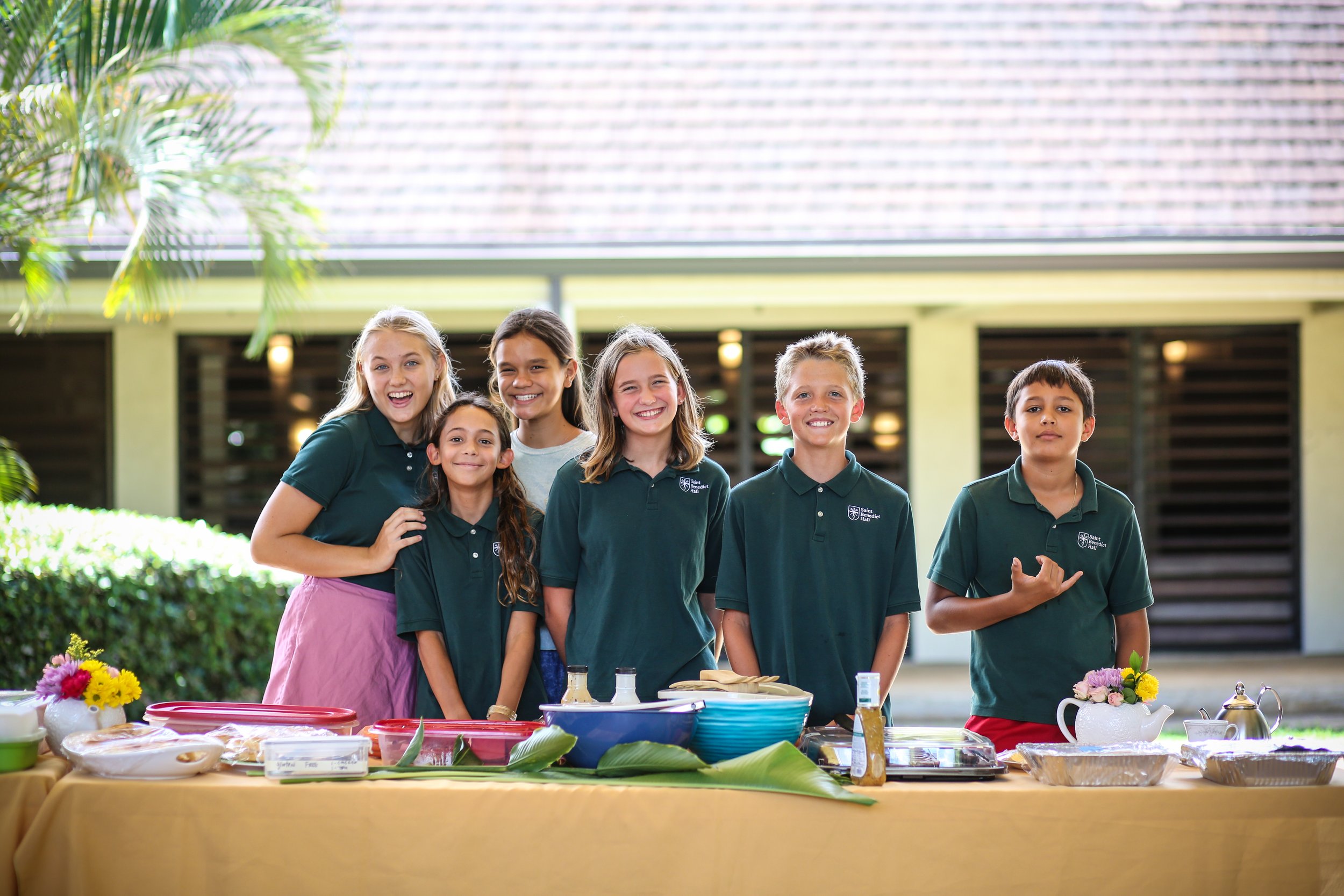
Why start a new Classical Christian Collaborative school?
There is both a new need and a new opportunity in our country for a distinctively Classical Christian Collaborative educational programs.
In the post-pandemic era, parents are more open than ever to alternative forms of education for their children. They’ve seen public schools reflect the values of society and less able to fight for what’s best for kids.
The Church has a tremendous opportunity in such a time as this to partner with parents both inside and outside the parish to provide this alternative. Christian education acknowledges Christ as the King of ALL of reality— history, science, art, nature, literature, and language. We recognize that to understand the world deeply means to recognize the Creator and Sustainer of that world.
Classical education roots our children in the best of our civilization and prepares them to stand on the shoulders of the great thinkers of the past.
Full-time private education continues to become more costly, pricing out many families. A collaborative model gives families the resources, flexibility, community, and structure to thrive at a reasonable price point. It can be the best of both a private and homeschool education!
-

Christian- Enculturating truth, beauty, and goodness
-

Classical- Rooted in the Great Conversation
-

Collaborative- Restful balance between school and home
Overview
This webpage is designed to begin to assist other groups interested in starting a Collaborative Classical Christian model program. There are five stages involved in building out a new Classical Christian Collaborative model school for your community. The first two stages are provided for free, while the details of the final three stages are for those groups who would like to work with me as a paid consultant ($500 per school year).
Ten months is probably the quickest timeline, but one year of preparation is the most ideal goal. So the best time to start this process is in the early Fall. But the longer the runway to get started, the better!
Here are a few approaches that have influenced this particular Collaborative model:
The Missional Approach- Some schools require a covenantal agreement by all parents to believe in a particular doctrinal statement. We believe this misses the opportunity for the Church to reach out and become allies with like-minded families who don’t believe the same theological convictions. A missional school is one that has a solid foundation from which to unapologetically from, without requiring all families to believe in it. The Church should not overlook this opportunity to connect with families who are open to what a Christian school is offering.
The Network Approach- While Saint Benedict was initially founded as a ministry of a single parish, Christ the Foundation Anglican Church, we have since become a Network school. We have found that this approach has given the school a clear vision and mission as a ministry of several churches in the Hawaii Anglican Network. This approach pools the resources of many parish communities, rather than relying on just one.
The Charlotte Mason Approach- Mason was an early 20th century British educator who helped start a movement in England of PNEU schools that were rooted in Classical education. She advocated for a thick anthropology, which saw children as fully and mysteriously human. Rather than pushing children into developmental boxes (Grammar-Logic-Rhetoric), which the curriculum focuses, Mason’s philosophy insists that children can and should be growing in all the 7 Liberal Arts in ways that are developmentally appropriate. In other words, lower elementary children’s education should consist of much more than just memorization of facts, timelines, and jingles (as some Classical Methods of education propose).
Stage 1 “Identifies a Vision-Seed”
The first stage is where a group of interested parents and pastors catch a common vision for what a school may look like and begin meeting as a Vision Team. This stage involves asking questions and learning more about what needs to go into starting a school. This is when the vision starts to take shape.
Stage 2 “Plants the Seed”
The second stage is where the core group (Vision Team) of interested parents and pastors identify a director who will take on the role of facilitator and initiator in articulating and communicating the vision for a new school to more interested families. The seed of the vision is planted and watered, but it is only God who can make it grow. At the end of this stage, the core group assess if there is the critical mass needed to continue, or to hold off and wait.
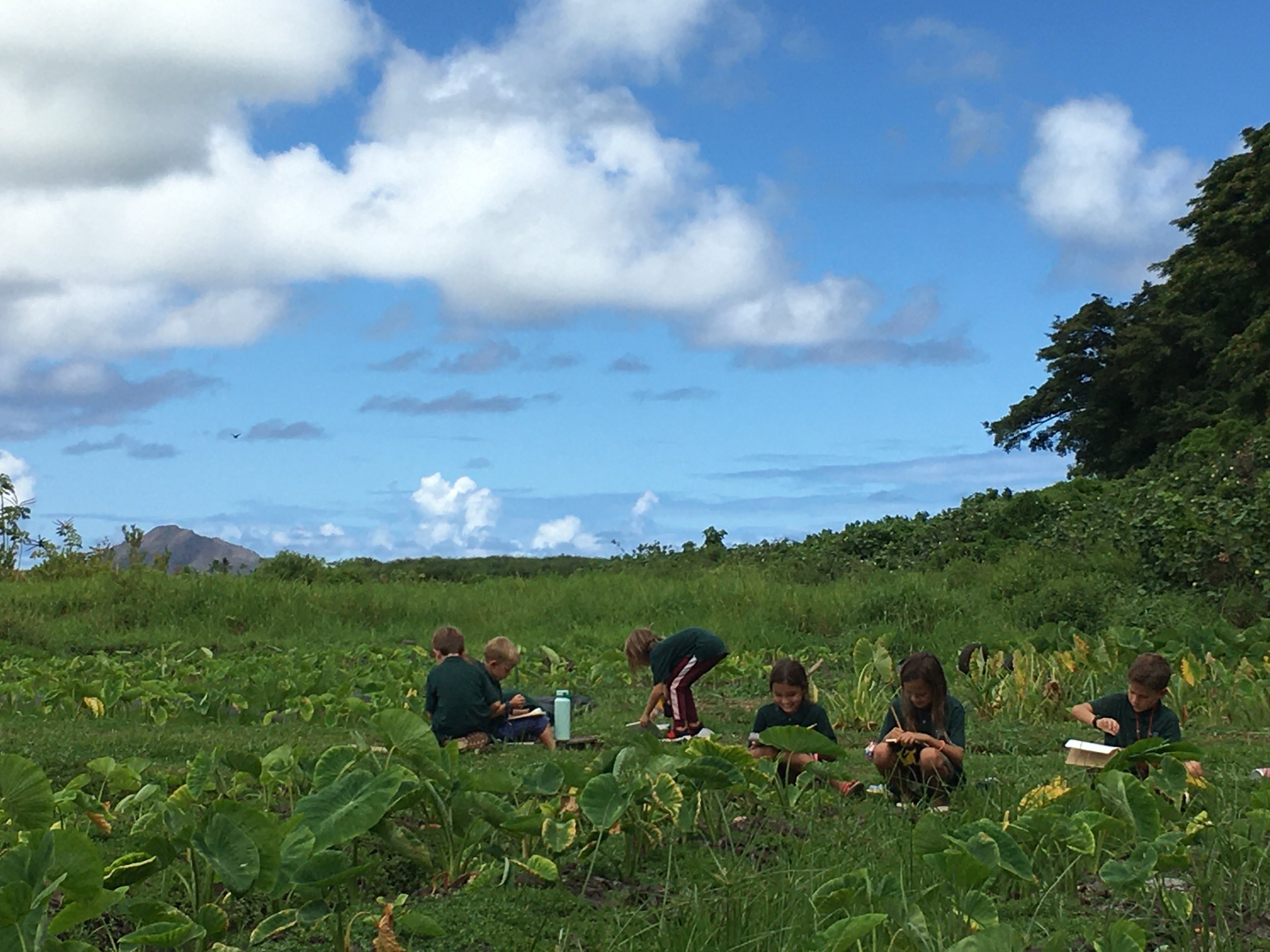
Stage 3 “Puts down Roots”
The third stage is where the Vision Team transitions to being Director and School Board led. Once the decision has been made to move forward the foundations and infrastructure of the school are established that will allow for healthy growth in the future.

Stage 4 “Grows Branches”
The fourth stage is all about developing infrastructure for organizing information, and marketing to and communicating with new parents. This is the phase that staff and teachers are hired and formalized, and a curriculum scope & sequence is developed to guide curriculum decisions.

Stage 5 “Cultivates Leaves”
The final stage includes finalizing and ordering curriculum, setting up communication, planning orientation events for parents and staff, creating a class schedule, and publishing a program handbook. Then pray for strength as you get ready to have your first day of school— the adventure then really begins!

Phase 1 “Identifies a Vision-Seed”
-
This is truly the Lord’s work, and unless He nourishes and grows it, it will not work out. Be in prayer for discernment and ask that He would bring to your group the right students, families, teachers and staff.
“I planted the seed, Apollos watered it, but God made it grow. So neither he who plants nor he who waters is anything, but only God, who makes things grow. The man who plants and the man who waters have one purpose, and each will be rewarded according to his own labor.” - 1 Corinthians 3:6-8
-
Explore and investigate various educational ideas and catching a vision for Classical Christian Collaborative education.
The whole Vision Team should read and/or watch the following:
CLASSICAL CHRISTIAN:
The Introduction to Beauty for Truth’s Sake: the Re-Enchantment of Education by Stratford Caldecott
COLLABORATIVE:
Summary of Collaborative Education by Two Rivers Classical Academy
The Ambrose School’s Bridge Campus
As you move forward, your director or admin team should read a couple of the following books:
-
Identify the initial key leaders who may be interested in spearheading the vision of a new school. These may be pastors and/or key parents. Limit to no more than 5 or 6 people.
The group should start exploring the potential vision for starting a school and discussing the scope of what you intend to do. Discuss the resources from #2 and see where the vision of new school takes you!
Also consider some structural options:
How many days? 1, 2, or 3 days? Pros and cons to all of them. The more days, the more involved the program becomes.
Do you want to focus on core academic classes or extracurricular classes?
Here are some other suggestions for casting vision and scope:
Be a Missional School— hold your convictions without apology, and yet be kingdom-minded and missional at the same time. This means that your school doesn’t require all families involved to agree and sign a specific statement of faith. Rather, a missional school will have a clear statement of faith that all families know will be taught to their children, even if these families come from a different faith tradition or from no faith background at all. This widens the number of families who will be interested.
Consider how to partner with the Church. We believe that the there is richness that comes when a school is an echo and an overflow of the life of the local Church. We have thrived as a Network school— governed and supported by the Hawaii Anglican Network.
The cost for this kind of education is anywhere between $2000-$3000 for one day a week, or $300-$7000 for three days a week per student. $4000 for a 3 day a week program would be a recommended starting cost.
Explore how your curriculum can be deeply contextual to your particular place, and also introducing students to the vastness of a Classical curriculum.
Consider becoming a DBA (doing business as) of an existing church. Becoming an autonomous educational non-profit entity has many additional legal and financial obligations (filing 990 forms, possibly registering as a “school” when filing for 501(c)3 status etc). Becoming a ministry of a church has many advantages, especially when first getting started.
-
Churches are the best place to start looking. They will be more willing to partner with you for a reasonable rental rate and often will have classroom space not used during the week.

Stage 2 “Plants the Seed”
-
At this point, it will be helpful to identify who will be taking more of a leadership role in leading, initiating, and shaping of the vision.
Here is the current SBH Director’s Job Description to use a template.
The details and salary of a director won’t be addressed until step #10 and #12. So there is some flexibility and trust in the Vision Team for the Director to move forward without total clarity on some of this.
The Vision Team should consider who:
Has a passion for CCC education
Has the margins in life circumstances to dedicate time and energy
Shares the general vision of the Vision Team
Has a willingness to learn on the job and is teachable and humble
is good with relating to both parents and students
is gifted in keeping multiple plates spinning
Can see a plan through from vision to reality in the micro and macro
It may be more prudent to have a Administrative Team work together rather than a single person for the first year to get things launched.
One model might be:
One person responsible for all the finances and logistics with facilities.
One person responsible for all the admissions and hiring of teachers
One person responsible for all the curriculum and class schedules and communication to parents.
-
This document should be written by the Director/Admin Team and include:
Why start a CCC school in your community?
Proposed CCC values for the community.
Proposed connection to the Church.
How many days a week is proposed?
Will your program focus on some core academic classes or electives? We chose core academics except for Math. Doing multi-grade classes doesn’t work with formal instruction in Math. We give our parents resources and suggestions, as well as an optional Math Study time in the afternoons. We cover Classics & Composition (Reading/Writing/Grammar), Humanities (Literature/History), Latin, Bible, Gymnasium, Music, and Nature Studies.
Will you have multi-grade “Form” classrooms? If so what will the breakdown be? We have Kindergarten, Lower Elementary (1st-3rd grade), Upper Elementary (4th-5th grade), Middle School (6th-8th), and High School (9th-12th grade).
What classes will be offered in each Form? We chose 5 classes plus all school gymnasium and music classes.
How will you compensate teachers? At SBH we compensate teachers 1 child in the program for every class taught. As program dues increase 5% per year, so does the pay.
How much are tuition/program dues being proposed? We started with $3000 for 3 days and increased that 5% every year. We are starting our high school at $4000 per year.
What are the possible locations for the school?
A proposed statement of faith, school name, and mission statement.
See the SBH Vision Document from 2018 that got us started.
Then get feedback and input from your Vision Team. After editing and clarifying the scope and vision, you can start to communicate the vision beyond your small group.
-
Before you can build out a website, you will need to purchase a domain name. Discuss what you want that to be and see if it’s available. You could use:
Your school website will be the single most powerful marketing tool you will have.
There are plenty of website design platforms, but we would recommend the easy and intuitive Squarespace.
Your website should include the information from your Vision Statement to create a place for interested families to go and explore what you have in mind. The website’s link can easily be shared throughout your community.
Also create a dedicated school email account for school related communication.
Name Cheap - will create emails to your domain name url
or use the classic and powerful (and free) Gmail
-
Your Director or Admin Team should be responsible for hosting these meetings to communicate the vision and gauge the interest in your community.
These meetings can be with several families or with a single family at a time depending on your scope. In larger contexts, having a polished presentation made by several people in your leadership team can work. Or just having one family over for dinner at your home at a time can work for smaller contexts.
Make sure that you emphasize that the school will grow and evolve as it grows, so be ready to be flexible. These founding parents are pioneers and need to have a spirit of resilience and grittiness.
You can use an interest form to get a sense of interest.
As you continue to spread the word and the network effect starts to occur, begin compiling a email list of interested families. You can create an email list in google contacts that makes it very easy to send out email blasts to your group with updates and information.
We found that it is prudent to always bcc in the blasts. It keeps everyone’s emails more private and secure especially as you expand to more and more new families.
-
Your Vision Team and Director/Admin Team should have a meeting after a couple months of informational meetings to then gauge the interest.
You can intuitively get a sense of where people are at who come to the informational meetings, or you can create a interest form where families can provide contact information, level of interest, and willingness to join staff eventually.
This is the point of no-return, where it becomes very difficult to turn around past this point. Does there seem to be the critical mass of interest, resources, facilities, staffing possibilities, to make it a realistic actuality? If not, it may be wise to wait for a year.
If the group isn’t unanimous, take your time and regather for a follow up meeting after more reflection and prayer.
Stage 3 “Puts down Roots”
The first two stages are provided for free, while the details of the final three stages are for those groups who would like to work with me as a paid consultant ($500 per school year). Paying me as a consultant involves up to one Zoom meeting with your leadership team or director per month, and full access to details in Stages 3-5 on this webpage.
These steps can be worked on all at the same time in no particular chronological order.

Stage 4 “Grows Branches”
These steps can be worked on all at the same time in no particular chronological order.
Stage 5 “Cultivates Leaves”
These steps can be worked on all at the same time in no particular chronological order.


Deacon Ben Moore
About
I grew up in the Seattle Area on Bainbridge Island. Music, the arts, philosophy, and theology were early interests of mine through high school. I studied Humanities in college and graduated from the University of Washington with a BA in Humanities. After spending time traveling in Peru, Turkey, England, and Canada, I lived for about a year in Kenya and was drawn to the Anglican Church. I was confirmed and served as a lay leader near Kisumu, Kenya, before returning to the States to continue my education at Westminster Seminary and Regent College. I attended the 2008 GAFCON conference in Jerusalem, finished my Masters degree in 2010, and then began my teaching career in the Bahamas and Seattle.
I moved to Hawaii in 2011, and joined a church plant in Kailua called Christ the Foundation Anglican Church. I was ordained as a vocational deacon in 2012, and participated in the growth of CtF and the Hawaii Anglican Network over the past decade.
I began teaching at Trinity Christian School in 2011— teaching Sixth grade for four years, followed by four years of teaching High School Humanities. During my time at Trinity, I met my lovely wife Sara, got married, and had our first child, Charlotte. We have since added two more boys to our family, Graham and Austin.
I became the Program Director at Saint Benedict Hall in the Summer 2019, and we’ve grown our community from 20 to 80 students over the past four years. I’ve consulted with Kingsfield Hall on Maui, and now have a deep commitment to help other groups interested in developing their own Collaborative Classical Christian model programs and share this wonderful model with more families.